The Problem
How do you design for both novices and power users — on a platform you didn't build?
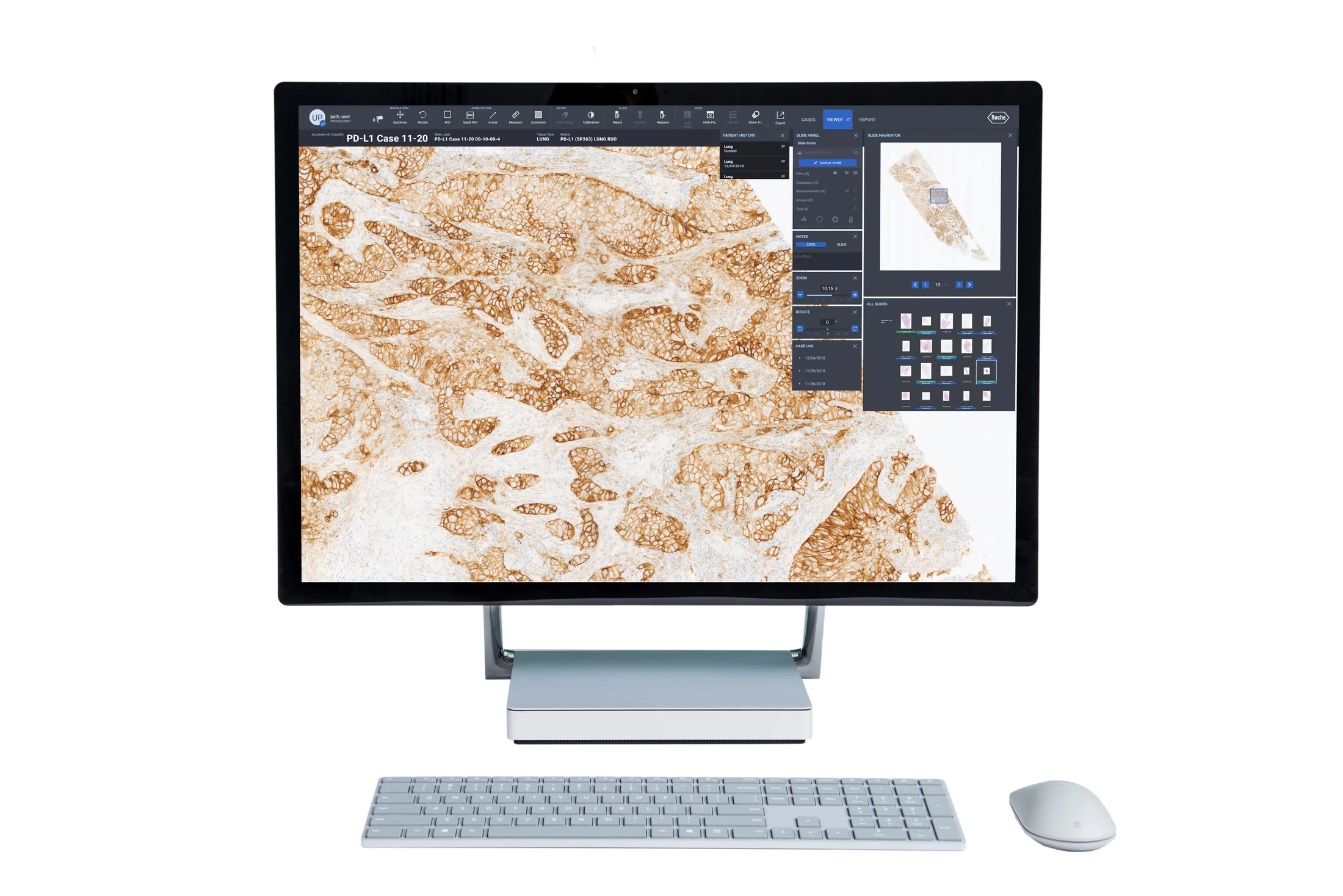
Roche's uPath digital pathology software employs multiple slide analysis algorithms that assist pathologists by providing relevant data, detecting tumor or non-tumor tissue, and scoring slides. Each algorithm has a unique set of inputs, outputs, and user needs — and each one required its own purpose-built workflow.
The core design challenge was two-sided: how do you cater a new algorithm's workflow and UI to meet the usability needs of users, while simultaneously aligning with the constraints of an existing platform?
Intuitive for newcomers to digital pathology
Powerful enough for experienced power users
Trustworthy — especially for AI-automated scoring
Compatible with a modular algorithm marketplace
A further complication: each algorithm is different. Some require pathologist input at every step; others score slides automatically with little or no interaction. Building trust in those automated algorithms — particularly among users new to AI-assisted pathology — was a persistent challenge that shaped design decisions across every workflow.
The Solution
A repeatable five-phase design process, applied uniquely to each algorithm
Rather than a one-size-fits-all approach, I developed a structured but flexible process that could be adapted to the specific demands of each algorithm — ensuring every workflow was grounded in user needs, validated through research, and built within real platform constraints.
01
Discovery
Speak to SMEs and review available materials to understand the users, the problem the algorithm solves, and the implementation constraints.
02
Ideation
Weekly workshops with designers, developers, PMs, SMEs, and users to refine workflow diagrams, storyboards, and wireframes.
03
Design
High-fidelity mockups and fully interactive prototypes in Figma — one for stakeholder demos, separate versions built for usability studies.
04
Research
Usability tests and cognitive walkthroughs with internal and external pathologists. Findings synthesized via affinity mapping into a documented report.
05
Development
Close collaboration with engineers to ensure designs translate faithfully. Progress tracked in weekly demos with the full project team.
Discovery
Began with conversations with subject matter experts and a full review of the algorithm's clinical use case — establishing who the users are, what they need from the workflow, and what technical or platform constraints exist before any design work began.
Ideation
Brought the full cross-functional team into weekly workshops. Designers presented workflow diagrams and wireframes to drive structured discussion with developers, product managers, SMEs, and users — pushing designs as far as possible before moving to high fidelity.
Design
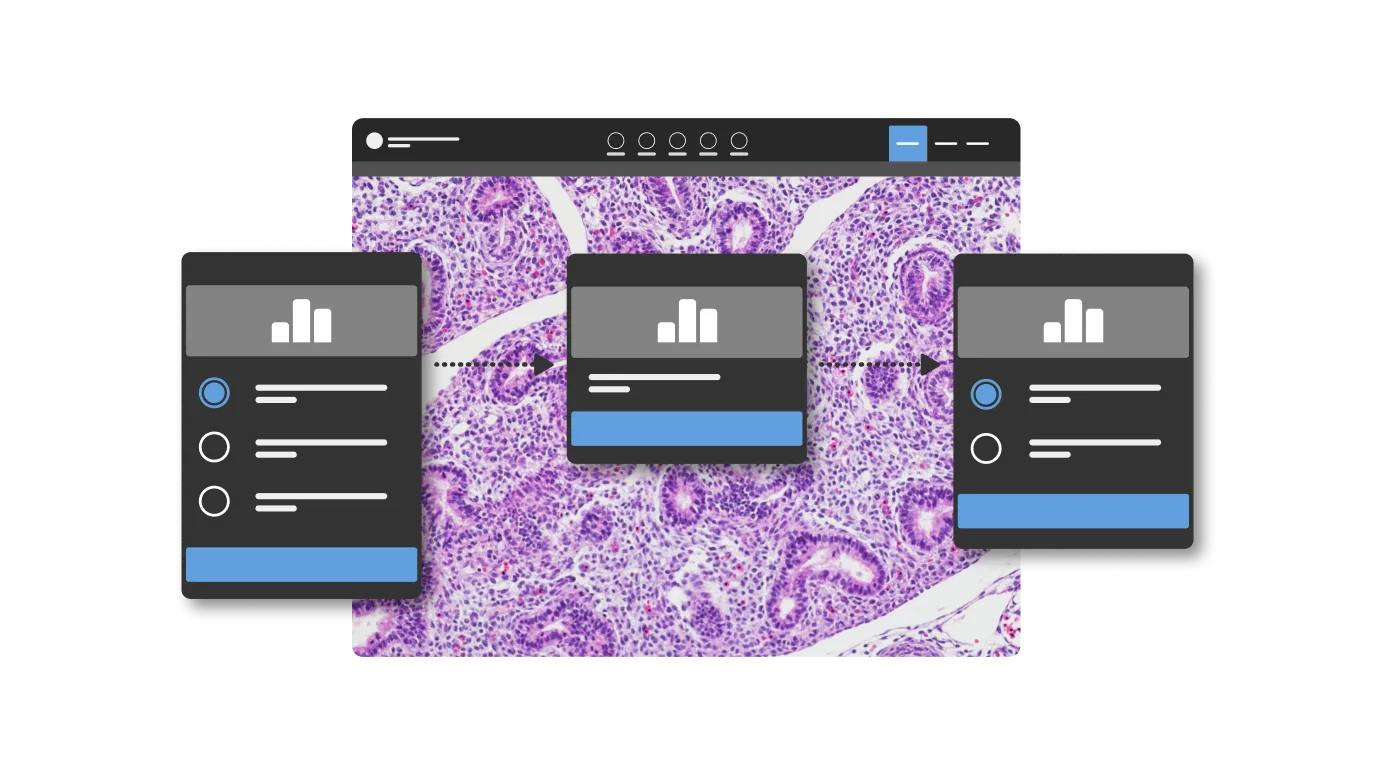
Used Figma to recreate the uPath interface with the new algorithm workflow fully illustrated at high fidelity. Each step in the workflow was detailed in its ideal state, and interactive prototypes were created — one version for presenting to stakeholders, and separate versions purpose-built for use in usability studies.
Research
Put designs in front of real pathologists — 1-hour sessions using interview guides, task lists, and cognitive walkthroughs. After each study, findings were synthesized through affinity mapping and documented in a formal report shared with the project team.
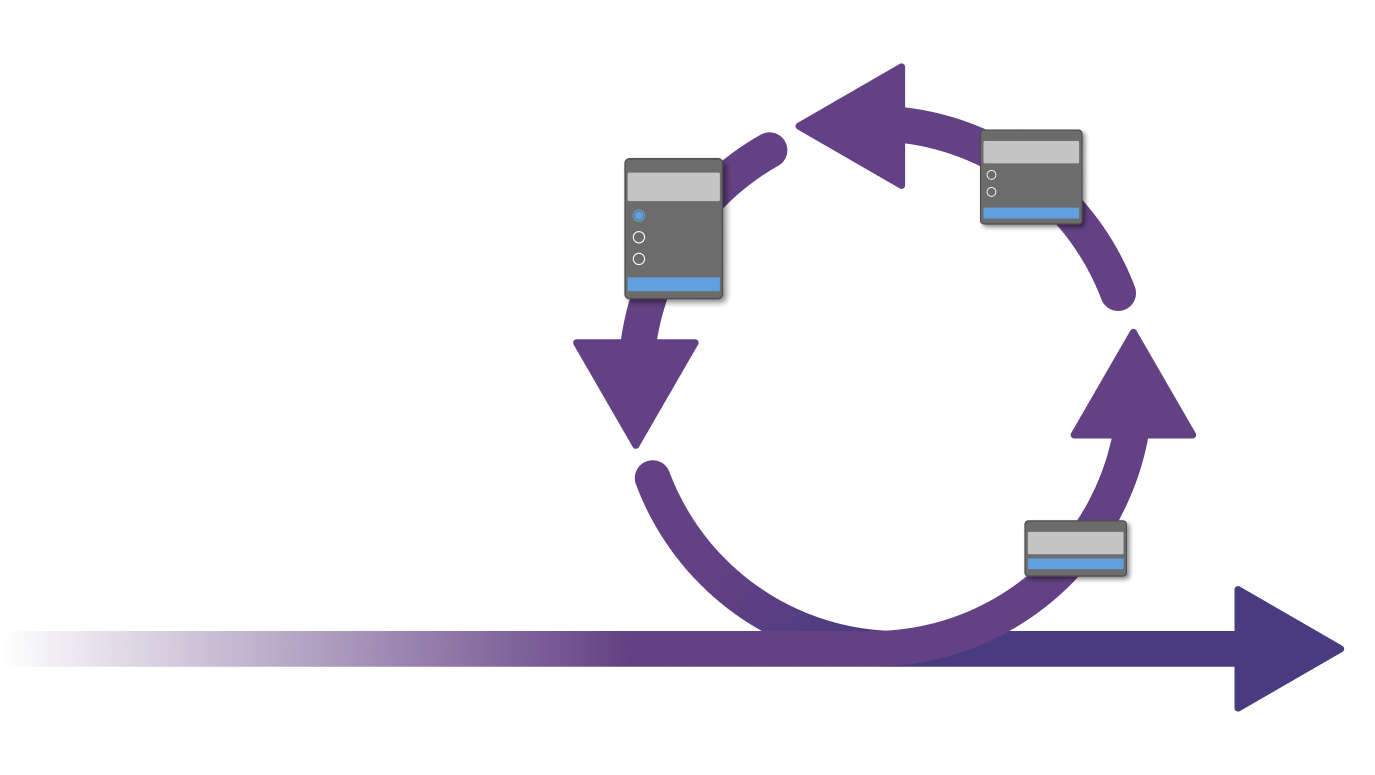
Iteration
Ran continuously — but most often followed user feedback sessions. Research findings were brought back to stakeholders and used to drive targeted design and workflow changes before handing off to development.
The Impact
On time, positively received, and the foundation for future work
Designs were delivered on time and within scope across multiple algorithm workflows. By staying out of the critical path, design ensured timely continuation of development activities — preventing downstream delays and keeping the project on schedule.
Feedback from pathologists during usability testing was positive overall, and the research findings generated through the process were leveraged beyond these workflows — contributing to other project activities and informing the broader platform roadmap. Most significantly, the quality of delivery solidified an ongoing relationship with Roche, securing additional design work for future algorithm iterations.
What this project achieved:
Delivered on time & within scope
Positive feedback from pathologist usability testing
Design stayed out of the critical path
Secured additional Roche work for future iterations